
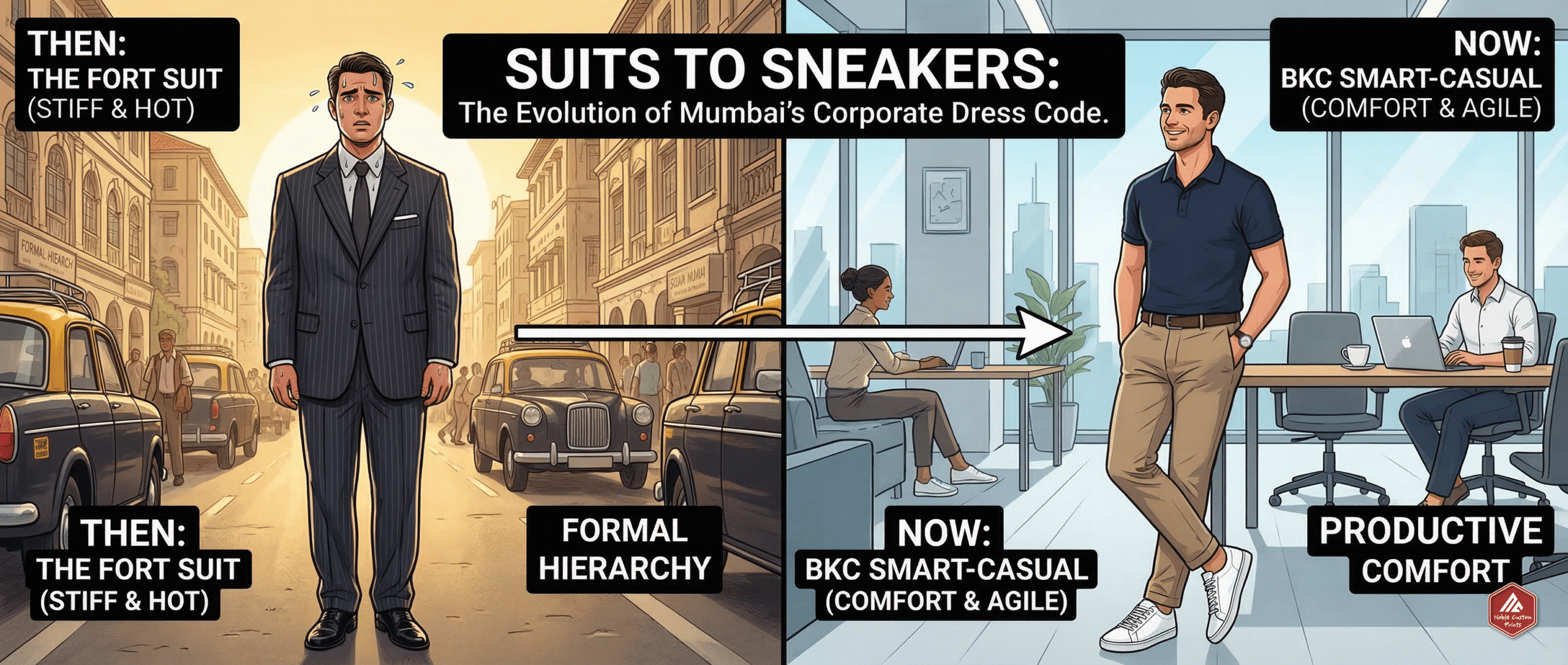
Suits to Sneakers: The Evolution of Mumbai’s Corporate Dress Code
If you walked into a corporate office in Nariman Point or Fort fifteen years ago, the visual landscape was uniform. Despite the crushing 35°C humidity outside, inside it was a sea of stiff white shirts, patterned ties, pleated trousers, and dark, polished shoes.
The suit wasn’t just clothing back then; it was corporate armor. It signaled hierarchy, seriousness, and a adherence to the “old ways” of doing business. You dressed for the job you wanted, and the job you wanted wore a blazer, even in May.
But step into a buzzing co-working space in BKC, a tech hub in Powai, or even a modern finance floor in Lower Parel today, and that sea of suits has evaporated.
The tie is endangered. The blazer is optional. And the polished derby shoe has been replaced by a clean, white leather sneaker.
Mumbai’s corporate dress code hasn’t just changed; it has completely revolutionized. Here is a look at the cultural shift from “Stiff Upper Lip” to “Smart Casual,” and what it means for your company culture.
The Catalyst: The Silicon Valley Effect & The Mumbai Heat
Two major forces collided to kill the traditional suit in Mumbai.
First, the undeniable impracticality. Mumbai’s climate was never meant for three-piece wool suits. For decades, corporate India suffered in silence for the sake of formality.
Second, the rise of the tech startup. When billion-dollar companies were being built by founders in hoodies and jeans in Silicon Valley, the global perception of “what success looks like” shifted. The ethos moved from “dress for status” to “dress for productivity.”
Suddenly, being comfortable wasn’t seen as lazy; it was seen as efficient. Why are we strangling ourselves with ties when we could be coding, designing, or closing deals in comfort?
Defining the New “Smart Casual”
The pendulum swung away from formality, but it didn’t swing all the way to sloppy.
The modern Mumbai workplace isn’t about wearing gym clothes to the office (unless you work at a gym). It is about “elevated comfort.” The new uniform is intentional, sharp, but inherently relaxed.
- The New Shirt: The stiff, starched button-down has been replaced by the structured, premium polo or the high-quality, minimalist crew neck. It looks professional under a jacket but feels like a weekend tee.
- The New trouser: Pleated slacks are out. Chinos, tailored joggers, or dark, clean denim are in.
- The New Shoe: This is the biggest signifier. The sneaker—once reserved for the commute—is now acceptable in the boardroom, provided it’s clean, minimalist, and intentional.
Employer Branding in the Sneaker Era
So, why does this matter to an HR Head or a Founder?
Because your company merchandise needs to match the era you are living in.
If your company culture preaches agility, modernity, and comfort, you cannot hand a new employee a cheap, ill-fitting, old-school uniform on their first day. It creates a cultural disconnect.
The companies winning the talent war today understand that corporate apparel isn’t about forcing a uniform; it’s about providing gear that fits their team’s lifestyle. They are investing in sleek, minimalist polos that look great with chinos. They are designing premium hoodies that employees actually want to wear to a co-working space.
The suit may be dying, but looking sharp is more important than ever. The rules have just become more comfortable.